
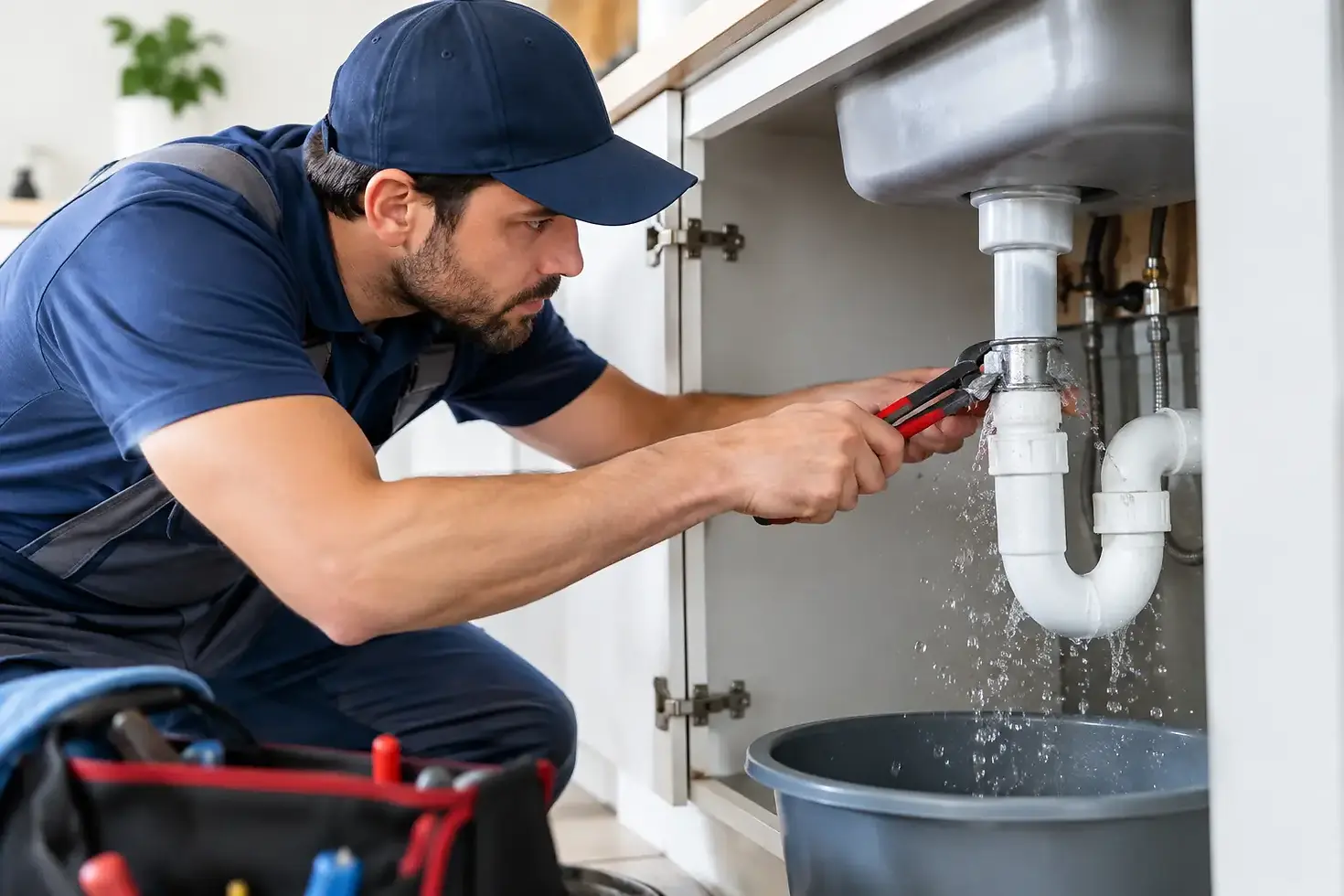
Emergency Leak Repair Example: A Fast Response
A leak does not need to flood an entire room to become an emergency. Water spreading from beneath a kitchen sink, a ceiling stain that suddenly begins dripping, or a burst supply line near a water heater can damage cabinets, flooring, drywall, and belongings in a short time. This emergency leak repair example shows what a homeowner can expect when a professional plumber is called to find the source, stop the water, and make the right repair.
An Emergency Leak Repair Example in a Family Home
Imagine a homeowner in Middle Tennessee finding water across the laundry room floor early in the morning. The water heater is in a nearby utility closet, but the tank itself looks dry. The homeowner turns off the home's main water supply, moves boxes away from the wet area, and calls for professional plumbing service.
At first glance, the leak appears minor. Water is collecting around a wall behind the washing machine, and there is no obvious broken pipe in sight. This is exactly why an emergency leak should not be judged by the size of the puddle alone. Water can travel along pipes, behind walls, and under flooring before it becomes visible.
A professional plumber starts by confirming that the main water is off and checking for immediate safety concerns. If water has reached electrical outlets, appliances, or a water heater's electrical connections, the area may need additional precautions before work begins. The next step is tracing the leak back to its actual source rather than repairing the first wet spot that is found.
In this case, the cause is a failed washing machine supply hose connection behind the appliance. A small crack in the fitting has been allowing water to spray against the wall whenever the washing machine runs. The hose connection and damaged fitting are replaced, the connection is tested under pressure, and the homeowner is shown where the failure occurred.
The repair itself may be straightforward. Finding the true source, preventing additional damage, and verifying the repair are what make the service valuable.
What Happens During an Emergency Leak Repair
Every home and leak is different, but a dependable repair process follows a clear order. First, the active water source must be controlled. Then the plumber identifies whether the issue is a fixture connection, a supply line, a drain line, a water heater component, an underground line, or a hidden pipe inside a wall or floor.
A leak from a pressurized water line often continues even when fixtures are not being used. A drain leak may only appear when a sink, shower, washing machine, or toilet is operating. That difference matters because it changes how the plumber tests the plumbing system and what repair is needed.
Once the source is identified, the plumber explains the condition of the affected part and recommends an appropriate repair. A loose fitting may only require a secure replacement connection. Corroded piping or a deteriorated shutoff valve may call for replacement of a larger section to prevent another failure soon after the visit.
The final step is testing. Water pressure is restored, fixtures are operated when needed, and the repaired area is checked carefully for moisture. A repair should not be considered complete simply because the water has stopped temporarily. It should be confirmed under normal operating conditions.
Why the Fastest Repair Is Not Always the Best Repair
Homeowners understandably want water stopped as quickly as possible. In many emergencies, that is the first priority. Still, there is a difference between a temporary stopgap and a lasting plumbing repair.
For example, a pinhole leak in an older copper pipe may be isolated and repaired in one location. But if nearby pipe sections show widespread corrosion, repairing only the visible leak could leave the homeowner facing another emergency shortly afterward. The right recommendation depends on the pipe material, its age, the extent of the damage, and the condition of the surrounding plumbing.
A trustworthy plumber should explain those options plainly. Sometimes a focused repair is the practical choice. Other times, replacing a compromised section provides better long-term value and greater peace of mind.
The First Calls and Actions Matter
When a leak is active, homeowners do not need to diagnose the plumbing problem before calling. Clear details help the plumber prepare, but the priority is limiting water damage and keeping people safe.
If it is safe to do so, turn off the closest fixture valve or the home's main water shutoff. Avoid using nearby plumbing fixtures until the source has been inspected. Keep children and pets away from standing water, especially around appliances or electrical equipment. If water is near electrical outlets, a breaker panel, or a powered appliance, do not step into the water or attempt to handle electrical connections.
When calling a plumber, describe where the water is appearing, whether it is clean or discolored, whether it is hot or cold, and whether the leak is still active after the water supply is shut off. Those details can help determine the urgency and likely source before the plumber arrives.
Hidden Leaks Can Require More Investigation
Not every emergency leak presents as a broken hose or dripping valve. A wet ceiling below an upstairs bathroom, warm spots on a slab floor, unusually high water bills, or the sound of water running when fixtures are off can point to a concealed problem.
In these cases, opening walls or floors immediately is not always the best first move. A professional plumber may use inspection and testing methods to narrow down the source before recommending access. This approach helps avoid unnecessary damage to finished areas while still addressing the plumbing issue quickly.
Underground water and sewer problems require the same careful judgment. A soggy patch in the yard or a sudden loss of water pressure may indicate a damaged buried water line. Slow drains, sewage odors, or wastewater surfacing outside can signal a sewer line concern. These are not issues to wait out, because they can worsen and affect the home's daily use.
What to Expect After the Leak Is Stopped
Stopping the plumbing leak is essential, but it may not be the only work needed. Water can affect drywall, insulation, subflooring, cabinetry, and personal items. The amount of follow-up depends on how long the leak was active, how much water escaped, and what materials were exposed.
A plumber's role is to repair the plumbing source and confirm that the system is working correctly. Homeowners may also need to dry the affected space, document damage for insurance purposes, or arrange restoration work when materials have been significantly saturated. Prompt action can make a meaningful difference in limiting those next steps.
It is also a good time to ask about the condition of related plumbing components. If one aging supply line has failed, similar hoses, shutoff valves, or exposed connections elsewhere in the home may deserve attention. This is not about replacing parts without reason. It is about using a real repair event to make informed decisions before another emergency occurs.
When a Leak Should Be Treated as an Emergency
Any active leak that cannot be controlled, threatens electrical equipment, causes water to enter walls or ceilings, involves a water heater, or creates sewage exposure deserves prompt professional attention. A slow drip under a bathroom sink may be less urgent, but it should still be repaired before it damages the cabinet or allows mold-friendly moisture to build up.
For homeowners in Lebanon, Shelbyville, Mount Juliet, Carthage, Gordonsville, Brush Creek, Smithville, and surrounding communities, Cornerstones Plumbing provides professional residential plumbing service built around dependable workmanship and clear communication.
A plumbing emergency is stressful enough without guessing whether the repair will hold. The right response is a careful diagnosis, a repair suited to the condition of the plumbing, and the confidence that your home has been treated with the care it deserves.


Comments