
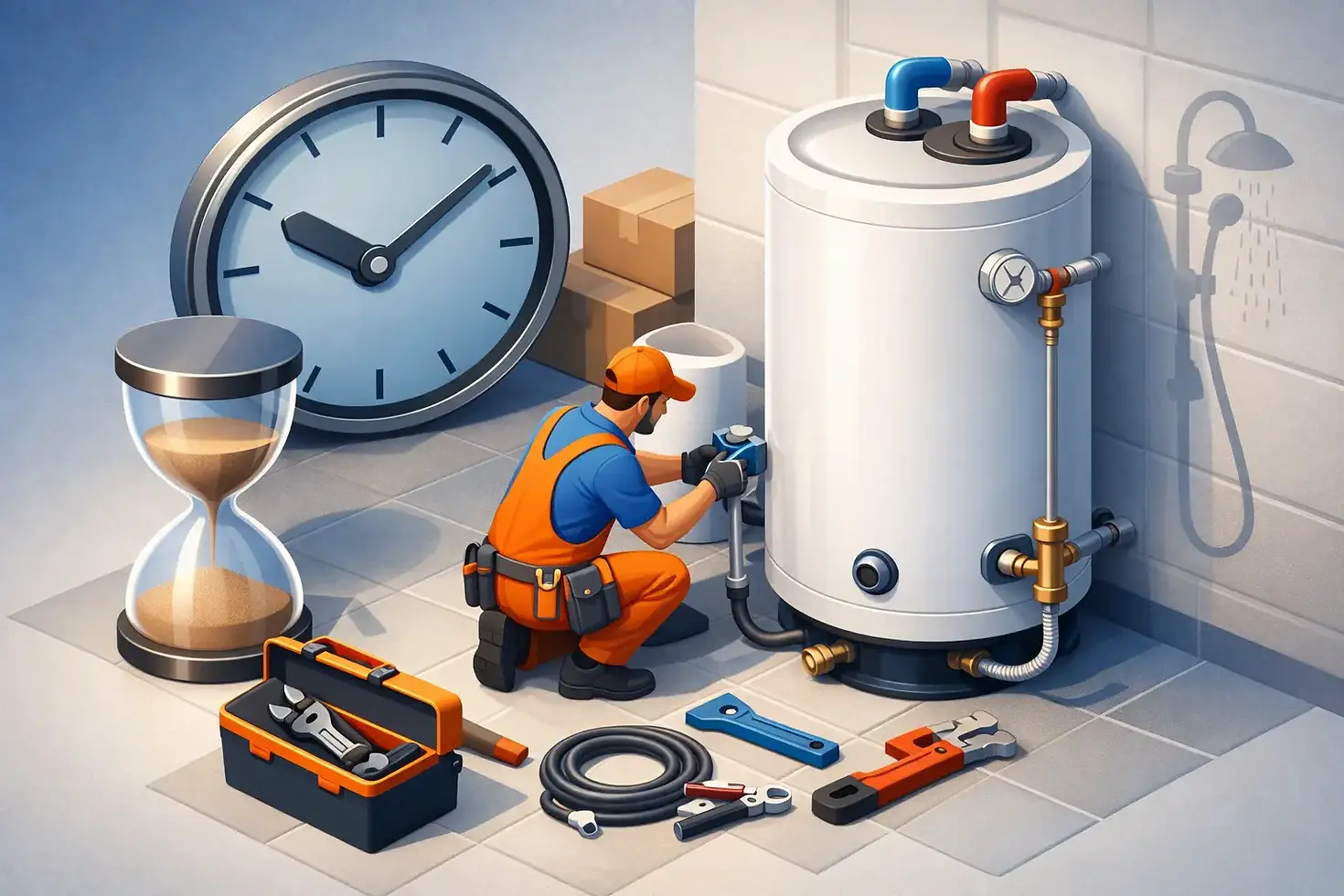
How Long Does a Water Heater Installation Take?
No one starts their day hoping to ask how long does a water heater installation take. Usually, that question comes up when the old unit is leaking, the hot water is gone, or the system is well past its prime and you need a clear answer fast.
For most homeowners, a standard water heater installation takes about 2 to 4 hours. That is the simple answer. The more honest answer is that installation time depends on the type of water heater, the condition of the existing setup, and whether anything needs to be brought up to current code.
If you are planning around work, school pickup, or a day at home waiting for service, it helps to know what can speed the job up and what can slow it down.
How long does a water heater installation take for most homes?
In a straightforward replacement, most installations are completed in a half day or less. If your new unit is the same type and size as the old one, and the plumbing, venting, and connections are already in good shape, the process is usually fairly efficient.
A typical replacement often includes shutting off water, gas, or power, draining and disconnecting the old unit, removing it, setting the new heater in place, making the new connections, testing the system, and confirming the heater is operating correctly. That sounds simple on paper, but every home has its own details, and those details affect timing.
Electric tank water heaters are often quicker to replace than gas models because they do not require fuel line work or venting adjustments. Gas water heaters can still be installed efficiently, but they tend to involve more safety checks and a few more variables.
Tankless water heater installations usually take longer than standard tank replacements. If you are switching from a tank to a tankless system, the timeline can increase significantly because gas line sizing, venting, electrical work, or water line modifications may be needed.
What affects water heater installation time?
The biggest factor is whether this is a direct replacement or a change in system type. Replacing an older tank with a similar new tank is usually the fastest path. Switching from electric to gas, tank to tankless, or relocating the heater takes more time because the work is more involved.
The condition of the existing plumbing setup also matters. If the shutoff valve is worn out, the drain pan needs replacement, the venting is outdated, or the water lines are corroded, the installer may need to correct those issues before finishing the job. That can add time, but it is also part of doing the work right.
Access is another common issue. A water heater tucked into a tight closet, garage corner, attic space, or crawl area may take longer to remove and replace than one in an open utility room. Even getting the old unit out of the house can be more difficult than homeowners expect, especially if the old tank is full of sediment or rust.
Permits and inspection requirements can affect the overall schedule as well, even if they do not add hours to the installer's time inside your home. In some cases, local requirements influence what updates need to be made during the job.
Standard tank installation vs. tankless installation
If you are comparing options, it helps to separate installation time by system type.
Replacing a standard tank water heater
A like-for-like tank replacement is usually the quickest installation. In many homes, this takes around 2 to 4 hours. That includes removing the old heater, setting the new one, connecting water and energy lines, and checking performance.
If the new tank is a different size, or if code upgrades are needed, the timeline can move closer to the longer end of that range.
Installing a tankless water heater
A tankless installation often takes 4 to 8 hours, and sometimes longer. That is especially true when converting from a traditional tank system. Tankless heaters have different venting requirements, and some homes need upgraded gas piping or dedicated electrical work to support the unit properly.
Tankless systems can be a strong long-term option for some households, but the installation is usually not as quick or simple as a standard tank swap.
Why code updates can add time
One reason homeowners are surprised by installation timelines is that the old unit may have been installed years ago under different standards. A plumber may find that parts of the setup no longer meet current requirements.
That can include venting changes, updated water shutoff valves, expansion tanks, drain pans, earthquake or safety strapping where applicable, or corrected pressure relief valve piping. These are not unnecessary extras. They are often part of a safe, professional installation.
This is where experience matters. A proper installation is not just about getting hot water back on. It is about making sure the system is safe, reliable, and built to perform the way it should.
What to expect on installation day
If you have never replaced a water heater before, knowing the general process helps set expectations.
The appointment usually starts with confirming the scope of work and checking the existing setup. Then the old heater is shut down, disconnected, and drained. Once it is removed, the new unit is brought in and positioned.
From there, the plumber connects the water lines, gas or electrical supply, and venting if needed. The system is then filled, tested, and checked for proper operation. On gas units, that includes making sure combustion and venting are working correctly. On electric units, it means verifying the power and heating elements are functioning as they should.
Cleanup and haul-away of the old unit are often part of the service, depending on the job. A professional installer should also explain any maintenance points or operating details you need to know before they leave.
How long will you be without hot water?
In most cases, you will be without hot water during the installation itself and for a short period afterward while the new unit heats up.
For a traditional tank water heater, once installation is complete, it can still take a little time for the tank to fully heat the stored water. Gas models often recover faster than electric models, but either way, you may need to wait a bit before taking a long shower or running multiple hot water fixtures.
With tankless systems, there is no storage tank to refill, but the unit still needs to be installed, tested, and set up correctly before it is ready for use.
Signs your installation may take longer
If your current setup has any unusual issues, it is smart to expect a longer window. That includes visible corrosion on pipes, an old platform or stand that needs repair, outdated vent materials, limited access, or a plan to change the heater size or fuel source.
Older homes can also present surprises once the work begins. That does not mean the project is off track. It just means the installer is addressing conditions that were not fully visible from the outside.
For homeowners, the best approach is to leave a little flexibility in the schedule and choose a plumbing company that explains what it finds clearly.
Choosing speed vs. choosing the job done right
Most homeowners want fast service, especially when the hot water is out. That makes sense. But installation time should never be the only measure that matters.
A rushed water heater installation can create bigger problems later, from leaks and poor venting to shortened equipment life. The right goal is efficient service with careful workmanship. That balance is what protects your home and gives you confidence in the new system.
For homeowners in Middle Tennessee, that often means working with a local residential plumber who understands common home layouts, local expectations, and the importance of dependable scheduling. Cornerstones Plumbing, LLC takes that kind of practical, professional approach because homeowners do not just need a new heater installed. They need to know the work was done correctly.
So, how long should you plan for?
If everything is straightforward, plan on roughly 2 to 4 hours for a standard tank water heater replacement. If the installation involves a gas unit, tankless system, code corrections, tight access, or changes to the existing setup, expect a longer window.
The best way to get an accurate timeframe is to have a professional assess the current unit and the space around it before the work begins. That gives you a realistic expectation, not just a guess.
When your water heater needs attention, time matters. So does workmanship. A good installation should restore hot water, protect your home, and leave you confident that you will not be dealing with the same problem again next month.


Comments